


 Published - Nov 12 2026
 12 min read
 127 views
Before-and-after photos are among the most useful tools available to someone considering facelift surgery. Yet a dramatic pair of images is not automatically the most informative. To understand the result, first determine whether the pictures are genuinely comparable. Then look beyond a younger-looking face to assess what changed, what stayed recognizable, and what the photographs cannot tell you.
At VG Signature in Tampa, board-certified plastic surgeon Dr. Vipul Gargya believes that a beautiful facelift result is about much more than tightening loose skin. It is about restoring the youthful harmony of the entire face, with careful attention to details that are often overlooked.
Here is what to look for when evaluating facelift before-and-after photographs.
1. Start With Photographic Consistency, Not the Transformation
Before examining how much younger someone looks, ask a simple question: Were these photographs taken under the same conditions?
Lighting, camera angles, distance, head position, and even facial expression can dramatically influence how someone appears in a photograph.
Different lighting can soften wrinkles or disguise shadows.
At VG Signature, before-and-after photographs are taken in the same room, using the same camera, lighting arrangement, and camera-to-patient distance. Patients look toward predetermined positioning markers to reproduce consistent facial angles, and backgrounds are kept free of distractions.
This carefully standardized approach is designed to make photographic comparisons as accurate and realistic as possible.
Although hairstyles, clothing, and makeup may change between sessions, the goal is to ensure that the improvements you see reflect the patient’s actual appearance rather than photographic tricks.
The first sign of a trustworthy before-and-after gallery is consistency.
2. Look at the Face Like a Sculpture, Not Just a Photograph
Imagine admiring a beautiful sculpture.
Would you look at it only from directly in front?
Of course not. You would naturally move around it, appreciating how the light catches its contours, how the different shapes connect, and how its proportions change from one perspective to another.
The human face is no different.
A frontal photograph is useful for evaluating facial balance and symmetry. But some of the most beautiful changes following a facelift become apparent when the face is viewed at an angle.
In fact, if you could examine only one view of a facelift result, the three-quarter view, also called the oblique view, is particularly revealing.
This angle allows you to appreciate several important features together:
- The shape and height of the cheekbones.
- The transition between the lower eyelids and cheeks.
- The contour of the jawline.
- The relationship between the chin and neck.
- The overall balance and harmony of the face.
At VG Signature, facial rejuvenation is approached almost like sculpture. The objective is not simply to make the face tighter, but to restore the natural contours and proportions that create a youthful, elegant appearance.
The accompanying photographs show the same VG Signature patient from several angles, with the preoperative photograph above the postoperative photograph in each comparison.
Notice how examining the face from different perspectives provides a more complete appreciation of the result.
One VG Signature facelift patient, photographed from four different angles. In each comparison, the upper photograph shows the patient before surgery, and the lower photograph shows the postoperative result. All photographs were taken using standardized lighting, camera distance, and patient positioning.
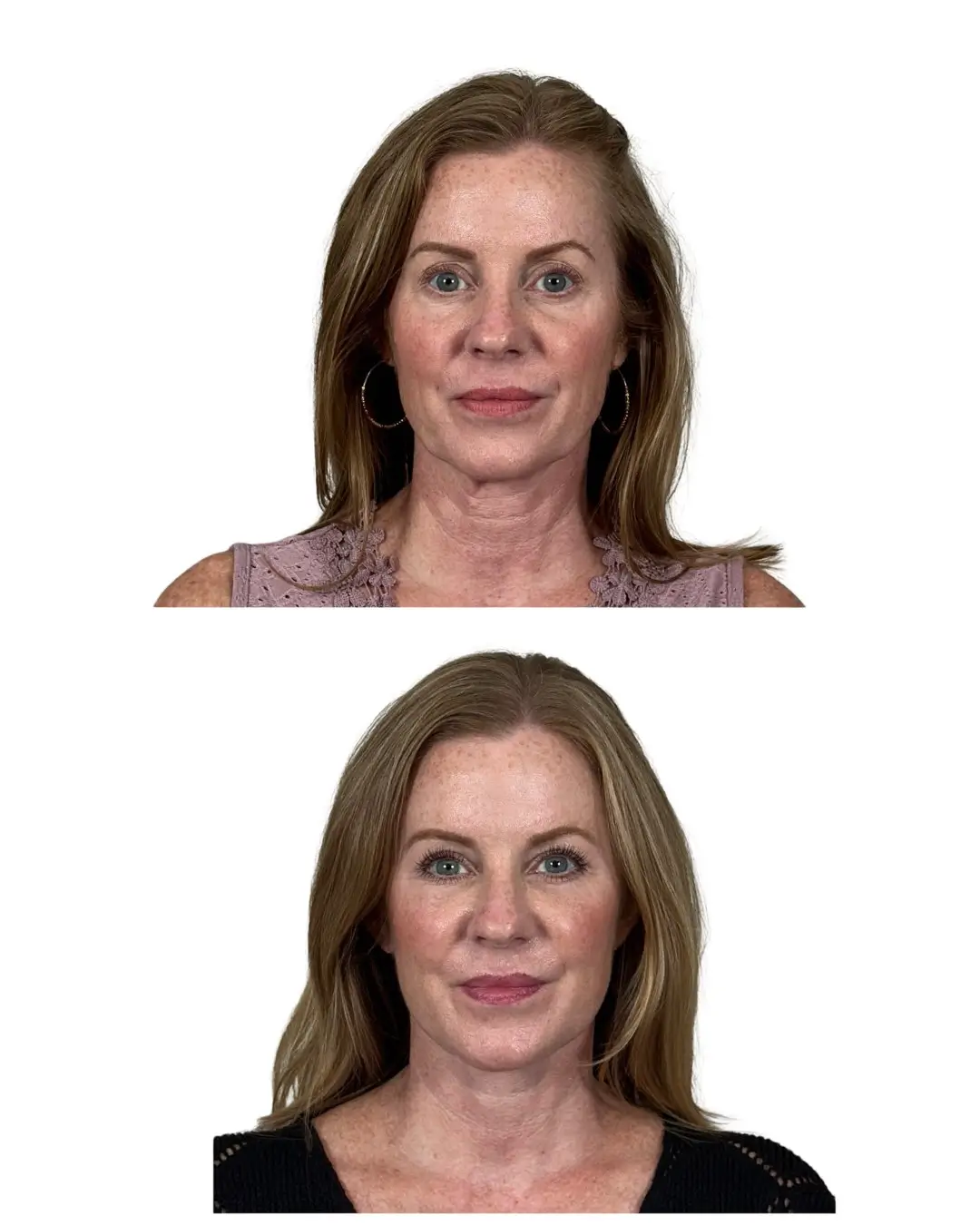
Frontal View
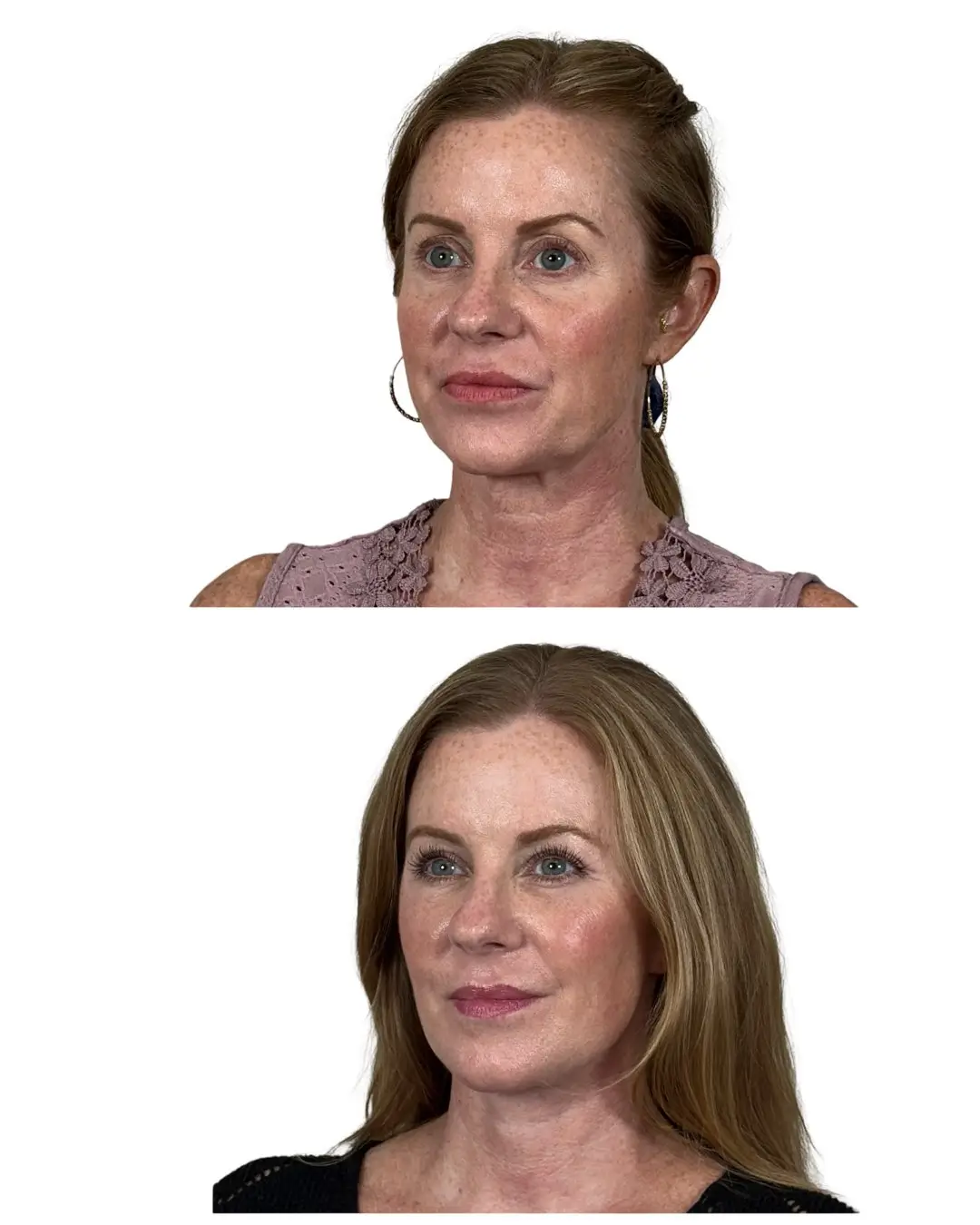
Three-Quarter View
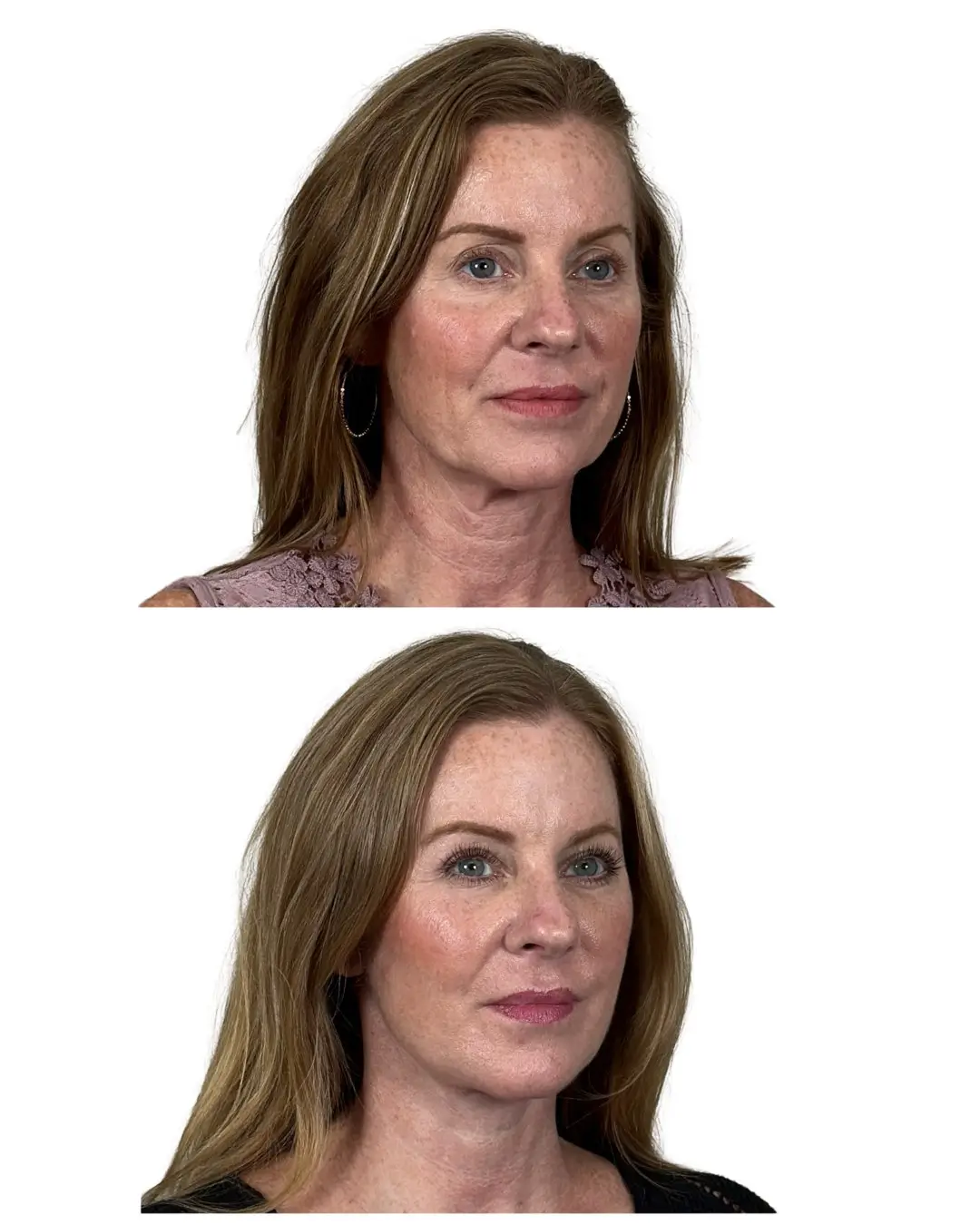
Alternate Three-Quarter View
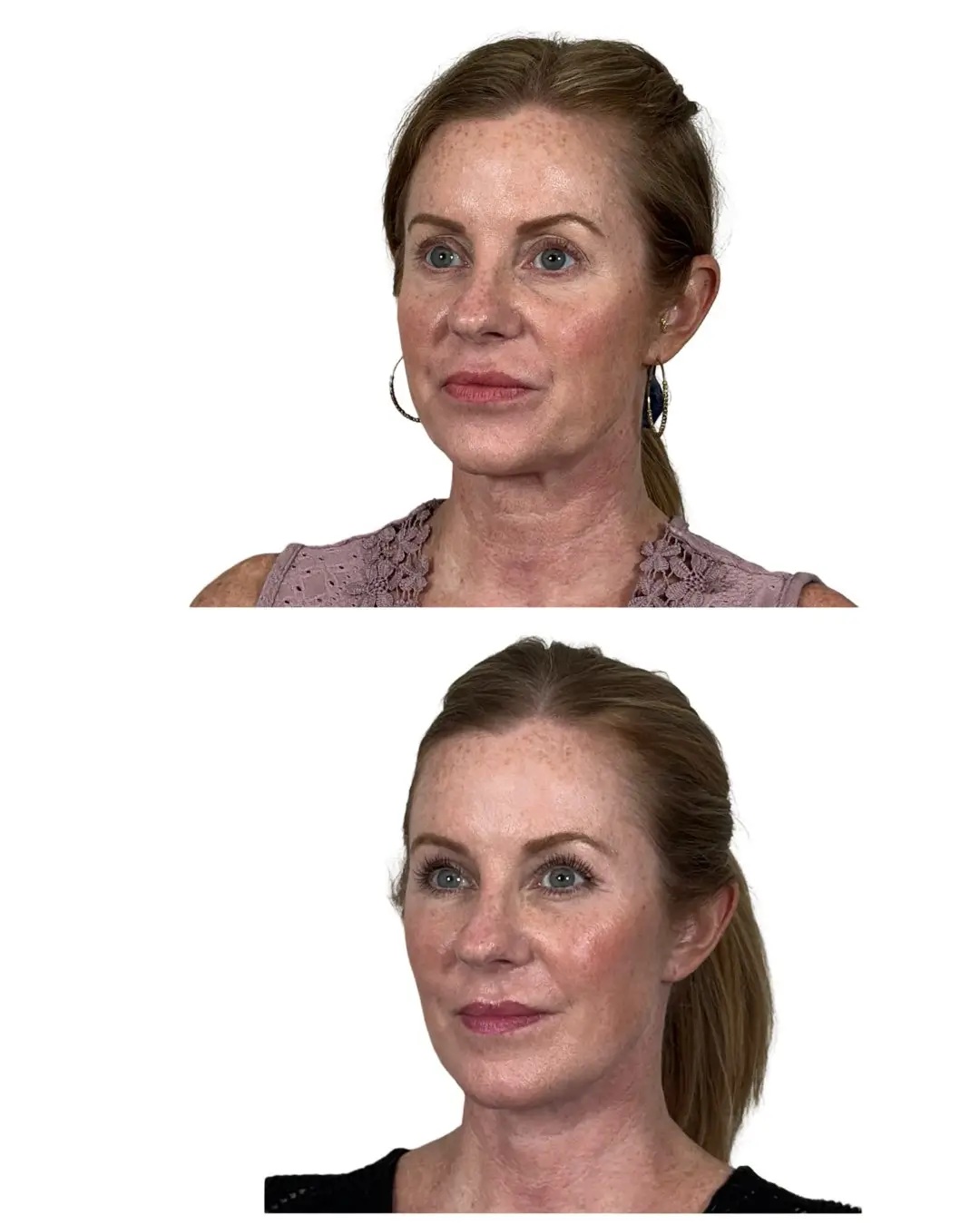
Additional Angled View
3. Look Beyond the Jawline: The Small Details That Create an Exceptional Facelift
While the neck and jawline are important, they represent only part of facial aging.
At VG Signature, Dr. Gargya’s philosophy is that the most beautiful facial rejuvenation comes from addressing the entire face, not simply tightening its lower half.
When looking at before-and-after photographs, pay attention to the following details.
The Eyes: Do They Look More Youthful and Refreshed?
One of the most overlooked aspects of facial aging is the loss of fullness around the eyes
Youthful eyes generally have a soft, smooth transition into the surrounding face. As we age, the temples and areas around the eyes may become hollow, creating shadows that make us appear tired, even when we feel perfectly rested.
This is why some facelift results can look incomplete. The jawline and neck may appear substantially younger, yet the eyes still look hollow and aged.
At VG Signature, rejuvenation of the temples and the area around the eyes is an important part of the overall aesthetic plan.
When reviewing photographs, ask yourself:
Do the eyes look brighter, softer, and more rested? Has hollowing around the temples improved? Does the upper face appear refreshed rather than simply pulled tighter?
A youthful-looking face should have youthful-looking eyes.
The Cheekbones and the Eye-Cheek Junction
Look at the cheekbones.
Do they appear more elevated and beautifully defined?
With age, the natural fullness of the cheeks can diminish or move downward. The lower eyelid and cheek may begin to look like two separate areas, with a visible hollow or shadow between them.
In a youthful face, the transition from the lower eyelid into the cheek tends to be smoother and more continuous.
Restoring this relationship is one of the subtler but most meaningful aspects of facial rejuvenation.
At VG Signature, Dr. Gargya pays particular attention to this connection, aiming to restore graceful facial contours without creating an exaggerated or overfilled appearance.
When viewing a result, look for a natural flow from the eyes into the cheekbones.
The Upper Lip and the Area Around the Mouth
The distance between the nose and upper lip often increases with age.
This can make the upper lip look longer and thinner, even when the rest of the face has been rejuvenated.
In selected patients, Dr. Gargya incorporates a carefully planned lip lift to improve upper-lip proportions and restore a more youthful relationship between the nose and mouth.
Small refinements in these areas can make a meaningful difference to the harmony of the entire result.
The Skin: Does It Look Healthier and More Radiant?
Facial rejuvenation is not simply about changing facial contours. The appearance and quality of the skin also contribute to how youthful someone looks.
At VG Signature, facial fat transfer is an important part of Dr. Gargya’s facelift approach.
Along with restoring lost volume, microfat and nanofat techniques helps improve the overall appearance of the skin.
When reviewing before-and-after photographs, look at the skin itself.
Does it appear smoother, healthier, or more radiant?
Because VG Signature uses consistent photographic lighting and camera settings, these changes can be evaluated with greater confidence rather than relying on flattering lighting or filters.
The Lower Face, Chin, Jawline, and Neck
Of course, the traditional signs of facial aging are still important.
Notice the lines extending downward from the mouth, known as marionette lines.
Examine the shape and projection of the chin, the definition of the jawline, and the transition between the face and neck.
In the neck, look for improvements in loose skin, fullness beneath the chin, and visible vertical muscle bands.
The goal is a smoother, more elegant contour that looks natural from multiple angles.
The Ears and Hairline: Can You Tell Surgery Was Performed?
One of the most revealing details in facelift photography is also one of the easiest to overlook: the ears.
Poorly planned incisions or excessive tension can distort the earlobe, sometimes creating what is known as a pixie ear, where the earlobe appears unnaturally stretched or pulled downward.
Visible scarring, altered hairlines, or distorted sideburns can also make an otherwise beautiful result look operated on.
At VG Signature, Dr. Gargya places considerable emphasis on meticulous incision planning, with attention to even the smallest anatomical details. Consider the tragus, the small projection immediately in front of the ear canal. Many surgeons place their facelift incision inside the tragus, known as an intratragal incision, in an effort to conceal the scar. While this approach can work well, it can also create a subtle giveaway: the skin covering the tragus is naturally different from facial skin.
It is typically thinner, smoother, and less hair-bearing. When thicker cheek skin is repositioned over the tragus, the difference in texture and appearance can alter its delicate contours, making the surgery more noticeable despite the attempt to hide the incision.
Recognizing this, Dr. Gargya often favors a carefully designed Couturalift incision, following a natural crease where light and shadow already meet. When meticulously placed, the incision can blend into the ear’s natural contours while preserving the original appearance of the tragus. The same philosophy extends to the earlobes, hairline, and sideburns, where careful planning helps preserve their natural position and shape.
When reviewing VG Signature’s before-and-after photographs, look closely at how the ears retain their natural anatomy and how discreet the healed incisions can become. These may seem like extraordinarily small details, but they reflect a fundamental difference in surgical philosophy.
Exceptional facial rejuvenation is not simply about lifting tissues and tightening the neck. It is about anticipating details that most people would never think to question, yet instinctively recognize when something looks unnatural.
At VG Signature, every incision, contour, and transition is considered as part of the overall aesthetic result. True refinement is often found in the details you barely notice.
4. Understand What Creates the Complete VG Signature Result
One of the most important questions to ask when looking at facelift photographs is whether the patient underwent a facelift alone or a more comprehensive facial rejuvenation procedure.
At VG Signature, the philosophy extends beyond simply lifting the skin and deeper supporting tissues.
Dr. Gargya recognizes that facial aging involves two major changes: facial tissues gradually descend, and the face loses youthful volume.
Correcting one without considering the other may leave the overall result looking incomplete.
This is why facial fat transfer, including microfat and nanofat, is an integral part of the VG Signature facelift approach.
Fat transfer uses a patient’s own fat to restore carefully selected areas of lost facial volume, including the temples, cheeks, and regions around the eyes when appropriate.
The objective is not to make the face look fuller for the sake of fullness. It is to restore natural proportions and soft contours that have diminished over time.
Beyond Volume: The Emerging Science of Fat-Based Rejuvenation
Fat is more than a simple filler. It is living tissue containing several cell types, including adipose-derived stromal and regenerative cells.
These cells are an important area of ongoing research in aesthetic and regenerative medicine, particularly for their potential influence on skin quality and tissue repair.
Dr. Gargya believes that thoughtful use of a patient’s own fat represents an important dimension of modern facial rejuvenation.
At VG Signature, the approach brings together deeper facial lifting, restoration of lost volume, and attention to skin quality.
In selected patients, additional procedures such as eyelid surgery or a lip lift may also be incorporated to address features that a facelift alone would not correct.
The VG Signature philosophy is straightforward: rejuvenate the entire face as a harmonious whole, rather than treating each sign of aging in isolation.
This comprehensive attention to detail is central to the natural, refreshed appearance Dr. Gargya achieves.
5. Look for Consistency Across Different Patients
One beautiful result can be impressive.
But the true measure of a surgeon’s aesthetic approach is whether that same level of refinement can be demonstrated consistently across different patients.
No two faces are alike.
People have different bone structures, skin tones, facial proportions, skin thicknesses, and patterns of aging. A technique that produces a beautiful result in one patient must be thoughtfully adapted to suit another.
When evaluating a surgeon’s before-and-after gallery, look beyond the most dramatic transformation.
Does the surgeon demonstrate refined results across different facial types? Do patients retain their individuality? Is there a recognizable standard of natural-looking rejuvenation throughout the portfolio?
At VG Signature, this consistency is a central goal.
Dr. Gargya applies the same underlying aesthetic philosophy to each patient while tailoring the surgical plan to their unique anatomy and desired outcome.
Why You May See Even More Results During Your Consultation
Not every patient wishes to share their before-and-after photographs publicly.
Some VG Signature patients, including those who maintain a particularly private or high-profile lifestyle, prefer that their photographs remain confidential.
For this reason, the public gallery represents only a portion of the practice’s surgical work.
During a private consultation, additional examples will be available for review where patients have authorized that use.
These cases can help demonstrate how the VG Signature philosophy is adapted to different facial structures, skin types, skin tones, and patterns of aging.
6. Six Questions Worth Asking When Reviewing Facelift Before-and-After Photos
Before choosing a facelift surgeon, consider asking these six simple questions:
1. Were the before-and-after photographs taken using consistent lighting, camera distance, and head positioning?
2. Do the results show improvements throughout the face, including the eyes, temples, cheeks, jawline, and neck, rather than just one area?
3. What procedures were performed to achieve the result, including any facial fat transfer, eyelid surgery, or lip lift?
4. Does the surgeon routinely address age-related facial volume loss, and how is fat transfer incorporated into the overall rejuvenation plan?
5. Can I see results from patients with facial features, skin types, and aging concerns similar to my own?
6. How does the surgeon preserve the natural appearance of the ears and hairline while keeping facelift incisions discreet?
These questions can help you appreciate the details that distinguish a thoughtfully planned facial rejuvenation from a result focused primarily on tightening the skin.
The VG Signature Approach to Documenting Results
At VG Signature, before-and-after photography is an important extension of our commitment to precision, transparency, and thoughtful surgical planning.
Our standardized photography process uses the same room, camera, lighting, camera-to-patient distance, and positioning markers to create realistic comparisons.
But the photographs are only the beginning.
What truly distinguishes the VG Signature approach is the philosophy behind the result.
Dr. Gargya believes that beautiful facial rejuvenation requires attention to the entire face, from the subtle fullness around the eyes and temples to the shape of the cheekbones, the proportions of the lips, the quality of the skin, and the definition of the jawline and neck.
The goal is not to look like someone else. It is to look like a beautifully refreshed version of yourself..
Explore our VG Signature Facelift Before-and-After Gallery to see additional patient transformations, learn more about our Facelift Tampa procedure, or schedule a private consultation with Dr. Vipul Gargya to discover how a personalized approach to facial rejuvenation may help you achieve your goals.