
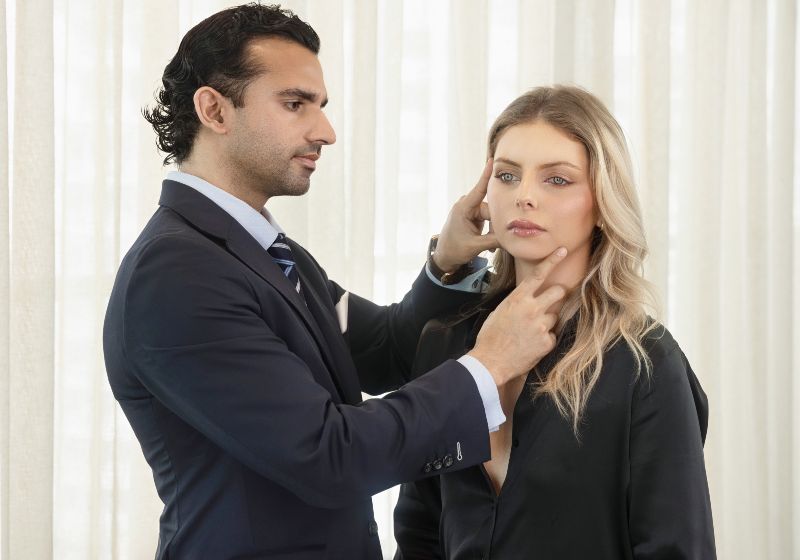
Many patients considering facial rejuvenation ask the same question: when is the right time for a facelift?
There is no single age when a facelift becomes appropriate. Instead, timing depends on the structural changes occurring in the face. As collagen declines and the deeper facial support layers begin to descend, patients may notice jowls, jawline softening, neck laxity, and deepening folds around the mouth.
Modern facelift techniques are designed to restore these deeper structural changes while preserving natural expression. When performed at the appropriate stage of aging, a facelift can create results that appear subtle, refreshed, and completely natural.
At VG Signature in Tampa, Dr. Vipul Gargya evaluates each patient individually to determine whether facelift surgery, a mini facelift, or non-surgical treatments are the most appropriate next step.
What Age Do Most People Get a Facelift?
While facelift surgery can technically be performed across a wide age range, most patients pursue their first facelift between their mid-40s and early 60s.
In recent years, many patients are choosing facial rejuvenation earlier than previous generations. Addressing structural aging sooner often allows for more subtle corrections and faster recovery compared to waiting until facial laxity becomes advanced.
Typical age ranges include:
- 40s Early signs of jowling or loss of jawline definition may appear. Some patients benefit from a mini facelift at this stage.
- 50s This is the most common decade for facelift surgery. Structural descent of the cheeks, jawline, and neck becomes more noticeable.
- 60s and beyond Facelift surgery can still provide excellent rejuvenation, especially when skin quality and overall health are strong.
Rather than focusing on age alone, surgeons evaluate how the deeper facial tissues have changed.
Signs It May Be Time for a Facelift
Several common signs indicate that facelift surgery may provide the most effective rejuvenation.
These include:
- Visible jowls along the jawline
- Loose or sagging skin in the lower face
- Loss of jawline definition
- Neck laxity or early “turkey neck”
- Deep nasolabial folds (smile lines)
- A tired or heavy facial appearance despite good skincare
When these changes are caused by structural descent rather than skin quality alone, non-surgical treatments often become less effective. A facelift addresses the deeper anatomical layers responsible for facial aging.
Is It Better to Get a Facelift Earlier?
Many patients assume that facelift surgery should only be performed later in life. However, modern facial rejuvenation philosophy often favors earlier intervention when appropriate.
When a facelift is performed before aging becomes advanced, the procedure can be more refined and less dramatic. The result often appears exceptionally natural because the surgeon is restoring subtle structural changes rather than correcting extensive laxity.
Earlier procedures may also require less extensive correction, shorter recovery time, and smaller adjustments to facial proportions.
For this reason, many surgeons now see patients in their late 40s and early 50s seeking preventative facial rejuvenation.
Mini Facelift vs Full Facelift: Which Do You Need?
Not every patient requires a comprehensive facelift.
Patients with mild to moderate laxity may benefit from a mini facelift, which focuses primarily on the lower face and jawline. This procedure uses smaller incisions and shorter recovery while still improving early jowls.
Patients with more advanced aging involving the midface, jawline, and neck may require a deeper structural lift such as a deep-plane or High-SMAS facelift.
During consultation, Dr. Gargya evaluates facial anatomy, skin elasticity, and tissue descent to determine which approach will deliver the most natural and balanced outcome.
How Many Years Younger Will a Facelift Make You Look?
Patients frequently ask how much younger they will appear after facelift surgery.
While results vary based on anatomy and aging patterns, most patients appear approximately 8 to 20 years younger following a well-performed structural facelift.
The key difference with modern techniques is that results do not appear artificially tight or dramatically altered. Instead, the face looks refreshed, rested, and naturally rejuvenated.
Friends and colleagues often notice that patients look better without being able to identify exactly why.
Why Timing Matters in Facelift Surgery
One of the most important decisions in facial rejuvenation is choosing the right moment to pursue surgery.
Waiting too long can allow deeper structural aging to progress, which may require more extensive correction. On the other hand, operating too early when laxity is minimal may not provide lasting benefit.
A consultation with a facial rejuvenation specialist allows patients to understand where they are in the aging process and which treatment options are most appropriate.
At VG Signature, surgical planning focuses on restoring facial harmony while preserving identity, expression, and natural movement.
Facelift Consultation in Tampa
Determining whether it is the right time for a facelift requires an experienced aesthetic eye and a detailed understanding of facial anatomy.
Dr. Vipul Gargya is a board-certified plastic surgeon specializing in advanced facial rejuvenation procedures including deep-plane facelifts, neck lifts, and structural facial restoration.
Patients travel to Tampa seeking natural, undetectable facelift results that restore youthful structure without appearing operated.
If you are beginning to explore facial rejuvenation, a consultation can help determine whether now is the right time for surgery or whether other treatments may be appropriate.
Board Certified Plastic Surgeon, more than 10,000 surgical procedures performed
Frequently Asked Questions
Q.1 What age is best for a facelift?
Answer: Most patients pursue facelift surgery between their mid-40s and early 60s. However, the best timing depends more on facial anatomy and tissue descent than on age alone.
Q.2 How do you know if you need a facelift?
Answer: Signs that you may benefit from a facelift include visible jowls, jawline softening, sagging skin in the lower face, and neck laxity. These changes often occur when deeper facial tissues descend over time.
Q.3 Is 40 too early for a facelift?
Answer: Some patients in their early 40s pursue a mini facelift if early structural aging appears. Treating facial descent earlier can sometimes produce more subtle and natural results.
Q.4 How long should you wait before getting a facelift?
Answer: Most surgeons recommend waiting until structural facial laxity becomes visible and persistent. Consultation with a facial plastic surgeon helps determine when surgery will deliver the most meaningful improvement.
Content medically reviewed by Vipul Gargya, MD, FACS, board-certified plastic surgeon.
Begin Your VG Signature Transformation
Refinement starts with a conversation. Schedule a personal consultation and discover what your one-of-one result could look like.


Meet Vipul Gargya, MD, FACS
Vipul Gargya, MD, FACS, is the founder of VG Signature, a couture plastic surgery practice in Tampa. He is board-certified by the American Board of Plastic Surgery and a Fellow of the American College of Surgeons.
He is best known for his work in deep plane facelift surgery, where the goal is to restore structure and harmony without creating a pulled or operated appearance. Patients travel nationally and internationally seeking a more precise, anatomy-driven approach to facial rejuvenation.
In addition to facial surgery, Dr. Gargya offers a signature approach to small, proportion-driven breast augmentation, including the VG Ballerina™ technique, a refined, small-volume approach designed for subtle, elegant enhancement rather than excessive fullness.
Each procedure is performed with precision, restraint, and a commitment to results that look like you, only more refreshed, balanced, and aligned.
Serving patients in Tampa, South Tampa, Brandon, Riverview, and throughout the greater Tampa Bay area, as well as nationally and internationally for refined facial and breast surgery