The Most Common Reasons Facelifts Look Pulled
Skin-Only Tightening: When skin is pulled without repositioning deeper facial structures, tension concentrates around the mouth, jawline, and ears, creating a stretched appearance.
Overcorrection: Removing or tightening too much tissue can permanently alter facial expression and anatomy, making results obvious and difficult to reverse.
Ignoring Facial Vectors: Natural rejuvenation requires lifting tissue in the same directions it descended. Incorrect vectors create distortion rather than restoration.
Volume-Driven Surgical Models: High-volume practices often prioritize efficiency over nuance, which increases the risk of aggressive tightening and standardized results.
Modern facelift techniques focus on repositioning deeper facial support structures rather than stretching skin. By restoring anatomy first and allowing skin to redrape naturally, results maintain softness, movement, and identity rather than appearing tight or surgical.
Why Some Facelifts Look Pulled
A facelift should never announce itself.
When performed correctly, the result is subtle, natural, and difficult to identify as surgery at all. People may comment that you look rested or refreshed, but they should not be able to pinpoint why.
Yet many patients hesitate to pursue facelift surgery because they have seen results that look tight, stretched, or unnatural. Understanding why some facelifts look pulled is essential to making a safe, informed decision.
This page explains the true causes behind the “pulled” facelift look and how modern, anatomy-driven techniques are designed to prevent it.
The Pulled Look Is Not Aging, It’s Technique
A pulled or wind-swept appearance is not an inevitable outcome of facelift surgery. It is almost always the result of how the surgery was performed.
Historically, many facelifts relied on tightening the skin alone. This approach creates short-term smoothness but ignores the deeper structures that actually age. When skin is asked to do the work that deeper anatomy should handle, tension builds in the wrong places.
That tension is what creates:
- Stretched facial contours
- Distorted hairlines or ears
- A tight look when smiling or speaking
- Results that worsen over time rather than improve
Modern facelift surgery exists specifically to solve this problem.
Skin Tension vs Structural Repositioning
The face ages structurally, not just at the surface.
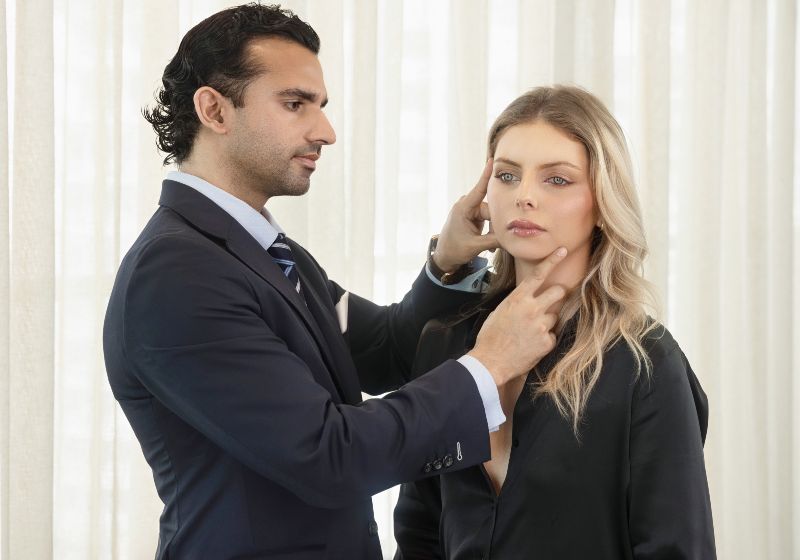
As we age, the deeper support layers of the face descend, particularly the SMAS and platysma. When a surgeon pulls only the skin, the deeper tissues remain displaced, forcing the skin to compensate.
This leads to:
- Over-tightening of the skin
- Visible tension around the mouth and jawline
- A flattened or artificial appearance
By contrast, advanced techniques focus on repositioning deeper tissues first, then allowing the skin to drape naturally without tension.
This distinction alone separates natural results from pulled ones.
Why Older Facelift Techniques Fail Long-Term
Traditional facelifts were often designed for speed and simplicity. While they may look acceptable early on, they tend to age poorly.
Common issues include:
- Recurrence of jowls as skin relaxes
- Progressive tightness around scars
- Visible signs of surgery within a few years
Because the underlying anatomy was never corrected, the face continues to age against an artificial surface tension.
Patients are then told they need repeated surgery or excessive fillers to “fix” the result, which often worsens the appearance.
Overcorrection Is a Judgment Problem
Not all pulled facelifts come from outdated techniques. Some result from overcorrection.
This occurs when:
- Too much skin is removed
- Fat is overly excised, creating hollowing
- The surgeon prioritizes dramatic change over harmony
Restraint is one of the most difficult surgical skills to master. It requires experience, confidence, and a deep understanding of facial balance.
The most natural facelifts often involve doing less, not more.
Why Volume-Driven Practices Increase Risk
In high-volume aesthetic practices, speed and turnover are often prioritized. Facelifts may be scheduled alongside multiple other major cases in a single day.
This environment increases the risk of:
- Fatigue-driven decisions
- Rushed closure under tension
- Standardized techniques applied to unique faces
Facial surgery does not tolerate shortcuts. Subtle millimeter-level decisions determine whether a result looks timeless or artificial.
The Role of Deep-Plane and High-SMAS Techniques
Modern facelift surgery evolved specifically to eliminate the pulled look.
Deep-plane and high-SMAS approaches work by:
- Releasing and repositioning the deeper facial support layers
- Allowing the skin to move independently, without tension
- Restoring natural contours rather than stretching them
When the foundation is corrected, the skin simply follows
This is why properly performed deep-plane facelifts look natural in motion, expression, and rest.
The Undetectable Facelift Is an Outcome, Not a Claim
An undetectable facelift is not a marketing term. It is the result of correct anatomy, precise technique, and surgical restraint.
At VG Signature, this philosophy is embodied in the CouturaLift™, a refined evolution of deep-plane and high-SMAS facelift surgery.
Rather than relying on skin tension, the CouturaLift™ uses:
- Bi-lamellar vector control
- Independent movement of deep structures and skin
- Meticulous, tension-free closure
The goal is not to make you look “lifted,” but to restore balance so you look like yourself again.
How to Avoid a Pulled Facelift Result
If you are considering facelift surgery, ask questions that go beyond before-and-after photos.
Important considerations include:
- Is the surgeon board certified in plastic surgery?
- How many facelifts does the surgeon perform personally?
- Are deep-plane or high-SMAS techniques used routinely?
- Is the practice structured around outcomes or volume?
- Does the surgeon emphasize restraint and anatomy?
A facelift should feel like a thoughtful, individualized process, not a standardized procedure.
A Final Thought
A pulled facelift is not bad luck.
It is the predictable outcome of misplaced tension, outdated techniques, or compromised judgment.
When facelift surgery is performed with respect for anatomy, patience, and restraint, the result should be quiet, natural, and enduring.
If your goal is to look refreshed without looking operated on, the technique and the surgeon matter more than anything else.
Board Certified Plastic Surgeon, more than 10,000 surgical procedures performed
Begin a Thoughtful Conversation
If you have concerns about facelift results or want to understand whether you are a candidate for an undetectable approach, a private consultation can provide clarity. Refinement starts with education, not pressure.


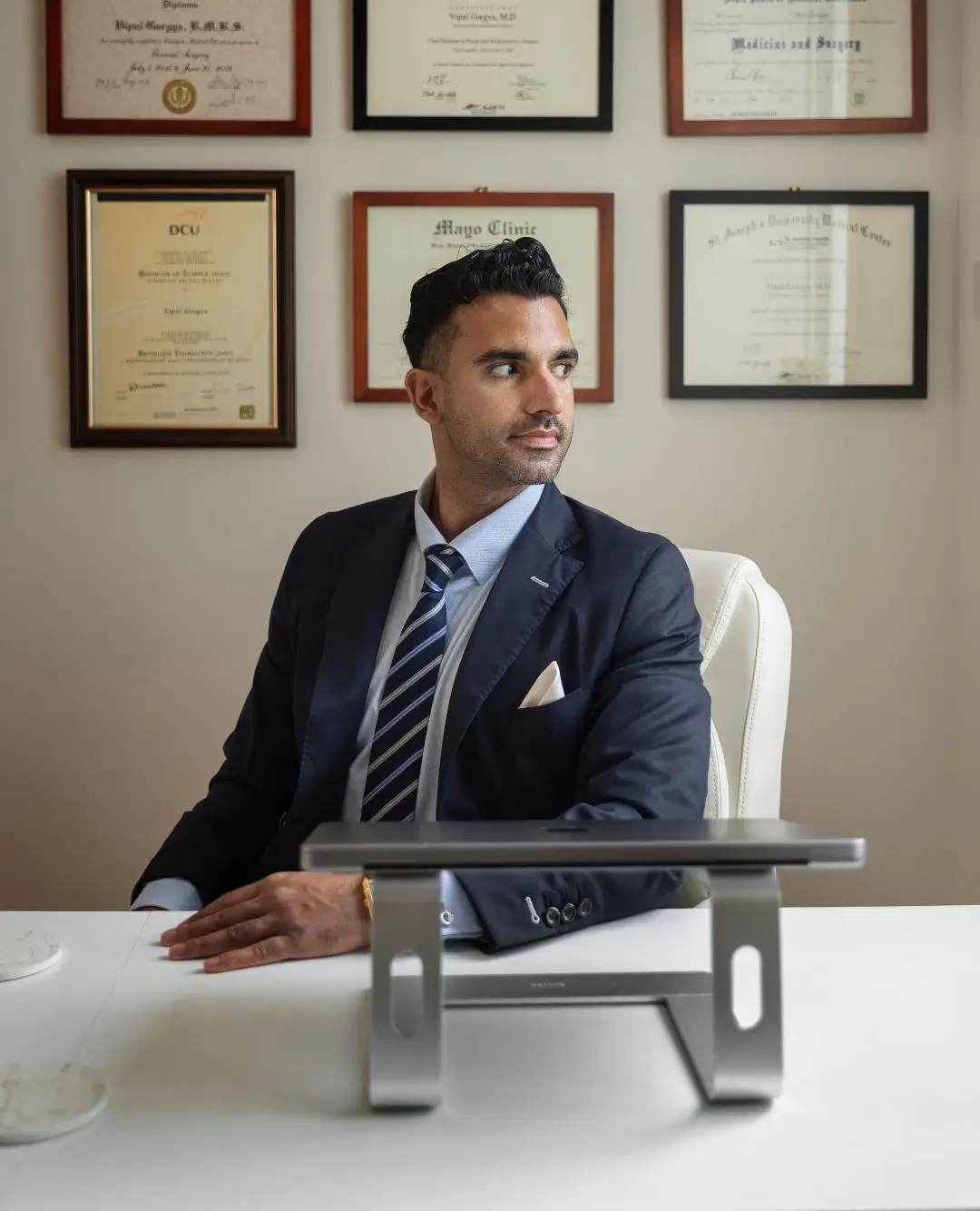
Meet Vipul Gargya, MD, FACS
Vipul Gargya, MD, FACS, is the founder of VG Signature, a couture plastic surgery practice in Tampa. He is board-certified by the American Board of Plastic Surgery and a Fellow of the American College of Surgeons.
He is best known for his work in deep plane facelift surgery, where the goal is to restore structure and harmony without creating a pulled or operated appearance. Patients travel nationally and internationally seeking a more precise, anatomy-driven approach to facial rejuvenation.
In addition to facial surgery, Dr. Gargya offers a signature approach to small, proportion-driven breast augmentation, including the VG Ballerina™ technique, a refined, small-volume approach designed for subtle, elegant enhancement rather than excessive fullness.
Each procedure is performed with precision, restraint, and a commitment to results that look like you, only more refreshed, balanced, and aligned.
Serving patients in Tampa, South Tampa, Brandon, Riverview, and throughout the greater Tampa Bay area, as well as nationally and internationally for refined facial and breast surgery